

Africa Just Got Its First Commercial RMB Clearing Bank
The new RMB clearing bank won’t end dollar hegemony in Africa, but it does gives African firms a strong alternative outside the dollar system.

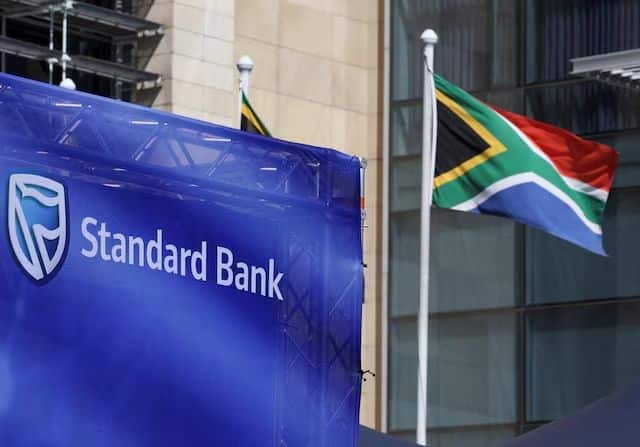
On June 26, China’s central bank, the People’s Bank of China authorized Standard Bank (Africa’s largest bank by assets) along with the Industrial and Commercial Bank of China, to work jointly as the “Renminbi Clearing Bank of Africa.” The arrangement is the first of its kind in China’s offshore RMB system: a continent-branded clearing bank, jointly operated by Standard Bank and ICBC, designed to clear yuan payments across 19 African markets, including Ghana, Nigeria, South Africa, and Zimbabwe.
Standard Bank only joined CIPS (i.e. the Cross-border Interbank Payment System, China’s alternative to the US-based payment system CHIPS) in November 2025. Within four months of joining, it had processed about half a billion US dollars in yuan transactions. While African countries will continue to use the dollar to settle international transactions, the ability to settle in RMB gives the important strategic and economic advantage that at least some of their transactions can be settled without the US Federal Reserve’s involvement or even potential veto.
Much of the discourse around de-dollarization in developing countries revolves around a single, and oversimplified question: Will the Chinese RMB replace the dollar as the world’s reserve currency? Once you put that way, the answer is obviously no. Not only do the conditions not exist for a modern-day Bretton Woods agreement that forces the RMB into every corner of the world, this isn’t a scenario that any Chinese economist or head of state would want to have happen. The Chinese strategy isn’t currency dominance, rather currency plurality instead.
As African firms buy more from China (and, in an ideal scenario for them, sell more goods into Chinese supply chains), their ability to pay directly in yuan is essential. The current status quo involves first converting local currency to US Dollars, then converting to RMB, which is not only inefficient, it introduces another layer of exchange risk into each transaction. Order placements, and their volume, can end up depending on what’s happening with the dollar’s value on that particular day. With a commercial bank in Africa offering direct currency settlement in yuan, this obstacle is now removed, and each party can transact based mostly on their mutual interest, rather than on whether the dollar’s value (or the US Office of Foreign Assets Control) could interfere.
As things are now, the yuan is the sixth most active currency for global payments, with a total share of less than three percent. In global central bank reserves, the yuan accounts for less than two percent. The dollar, on the other hand, accounts for roughly 57 percent. In terms of China’s own trade settlements with other countries, somewhere between a quarter and a third of its transactions are now settled in yuan.
The 1944 Bretton Woods agreement made the US Dollar the cornerstone of the postwar monetary order, and the development of trade and infrastructure through the eurodollar market made it nearly ubiquitous. The dollar became the world’s default settlement currency due in large part to its convenience; getting access to US dollars and settling transactions in US dollars (backed by gold until the 1970s) made for easy commerce between non-US firms and nations. What CIPS and the Renminbi Clearing Bank of Africa are doing, is making it easier for commerce between African nations and China.
Regardless whether one believes in the US and Europe-backed narrative that China is colonizing Africa, the fact of the matter is that China has been Africa’s largest trading partner for years. Last year alone, two-way trade between African countries and China rose nearly 18 percent. This past May, while the US and China continued to joust on mutual tariff policy, Beijing removed tariffs on imports from 53 African countries with which it has diplomatic relations. Along with the flow of goods comes the architecture for settling the transactions for those goods.
In a roundabout way, the US (specifically, the Joe Biden administration) is to thank for this development. For China, watching the US use CHIPS as a large-scale sanctions weapon against Russia was an object lesson in concentration risk; building a parallel payment system not only gave its own exporters a smoother channel for foreign transactions, it raised the question for exporters in other countries whether they ought to look for alternatives to the dollar.
For African banks and firms, the appeal of settling in yuan is less exciting geopolitically, but essential nonetheless. Unfortunately, US dollar liquidity in much of Africa is scarce and expensive. On top of being required for settling transactions with external buyers, the dollar is needed to pay for imports and service external debt (including those crushing debts many countries owe to the World Bank and the IMF). In fact, more than two-thirds of imports to the African continent are priced in US dollars; routing payments to Chinese firms through a chain of correspondent commercial banks in New York or London is slow incurs fees at every stop along the way. Clearing in yuan, on the other hand, cuts out these middlemen.
The de-dollarization debate often fixates on the dollar’s global reserve share, and treats any downward movement as the end times for US dollar hegemony. This is, in many ways foolish and misses the point. In fact, the global reserve share is the slowest-moving part of the global currency system; the last of lagging indicators. If there is any cause for excitement (or alarm, depending on one’s point of view), it’s that alternative systems that challenge dollar supremacy are right now being built and expanded upon. No, we are not looking at an American collapse, but we are, at least, seeing a viable pathway to the end of America’s ability to dictate terms to African countries, on how they participate in the global marketplace.